
In 2021, I wrote a blog post about oil pastels. I have come to realize how potent this medium can be, as I have used it to create multiple portraits, still life, and even a contest entry that earned me my first award in a national competition. With proper technique, good oil pastels can be used to create effects similar to that of oils, like impasto and similarly expressive strokes. I even find it more convenient to use oil pastels as there is no need for large palettes, multiple brushes, and different mediums that emit harmful vapors. I just use a color shaper to blend as needed.
In the past two years, a lot of things happened. I have updated my oil pastel arsenal as new makers have entered the market. What’s cool is that some are a lot more inexpensive despite the quality being top-notch. This is quite helpful, considering the rising prices of art materials and the scarcity of some brands as some manufacturers’ production have been affected by the pandemic.
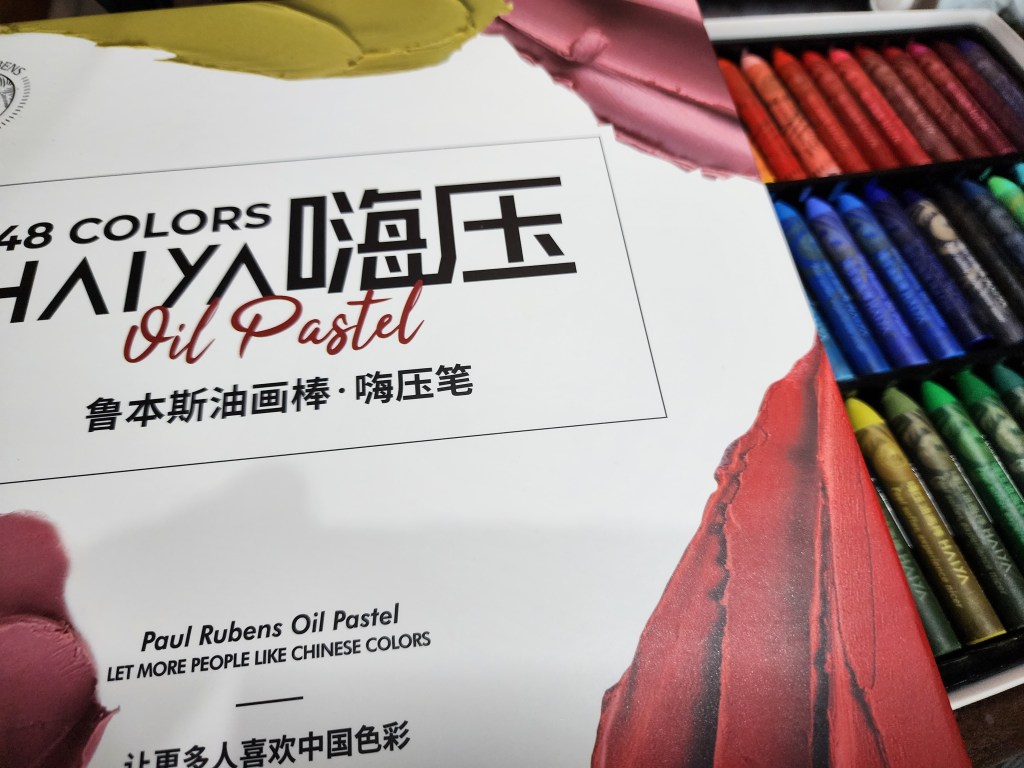
One of the new brands I came across is Paul Rubens, which recently launched a new line of oil pastels for artists of different skill levels. The China-based company has been making quality materials for some time. I have seen their extra soft pastel set and they seemed really good. I was able to get their 48-color Artist Oil Pastels set through AliExpress. It arrived quickly (I am from the Philippines) and in excellent condition. Here are my thoughts about their product.
Packaging. The oil pastels came in a thick cardboard box with an awesome design. At the bottom of the box is the lightfastness information, which is very helpful and quite rare, especially among inexpensive sets. Each pastel stick has its own slot in the molded plastic enclosure, thus keeping them all clean. The sticks are arranged systematically according to hue. It is secured in place with a sheet of foam. It came with an information sheet as well. It contains info about the available sets and colors, the manufacturer’s description of the product, and some suggested techniques for use. In terms of safety information, there is a choking hazard warning for children below three years old and what seemed to be some sort of regulation pertaining to heavy metals (as translated by an AI camera app). Many artist grade materials use pigments that contain heavy metals like cadmium and cobalt.
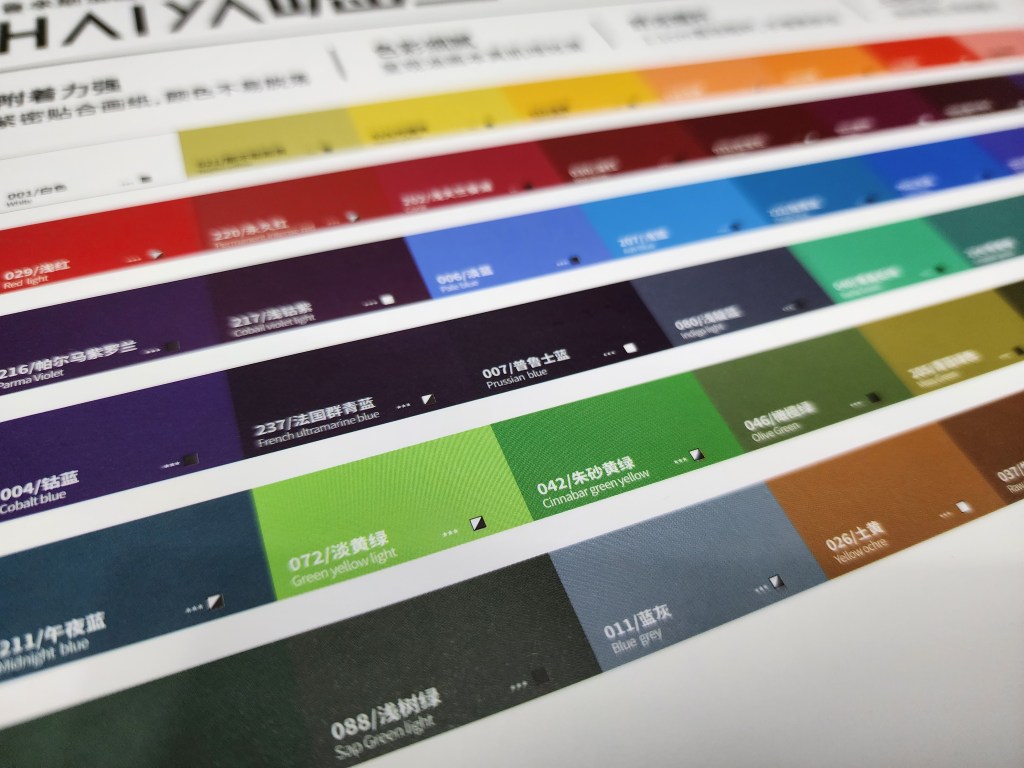
Color range. The 48 color set seems to be ideal for landscapes and floral paintings. The set has a great assortment of reds, blues, violets, and greens. Out of the 48 colors, only two do not have excellent lightfastness, but are still good (**). I honestly think that the hues included are not quite usual, as there are some that can often only be found in large sets in other brands, like green yellow light, light indigo, and prussian blue. There is a limited range of earth tones, however. There also seems to be no flesh color in the set and painting portraits could be a challenge as there will be a lot of blending or adjustments to the color temperature of the subject involved. I often mix colors while painting, hence I can work around the hues included in the set. Upon checking the leaflet, the flesh tones are in their 72 color set (the full range). I personally would like to buy it in the future.
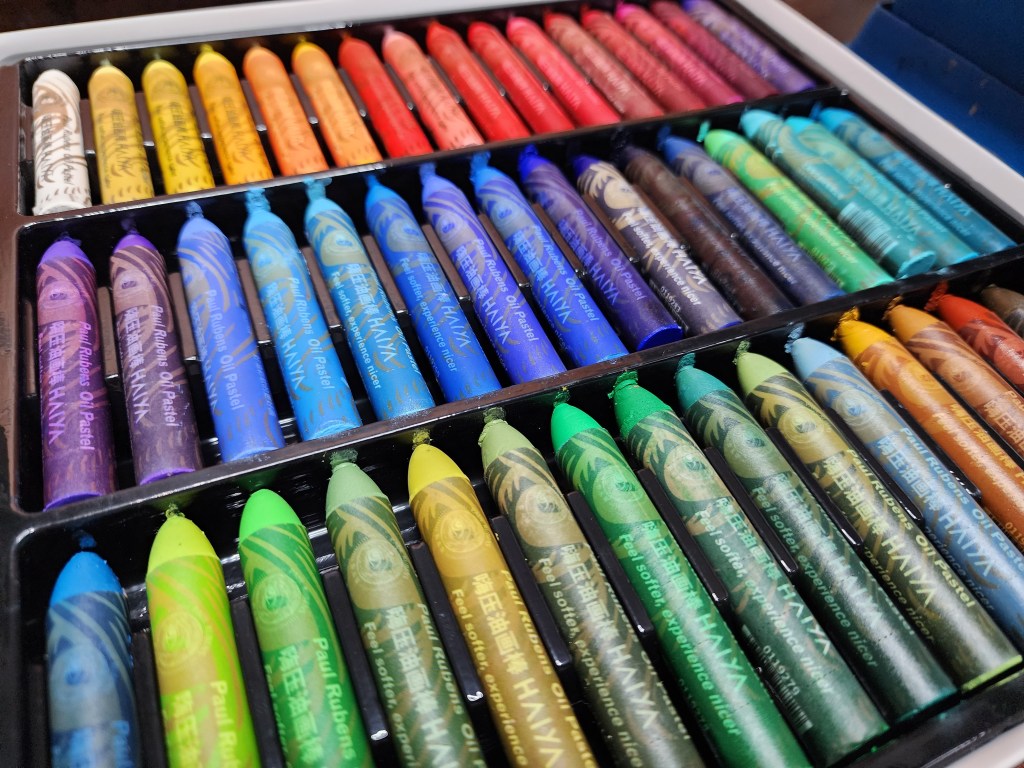
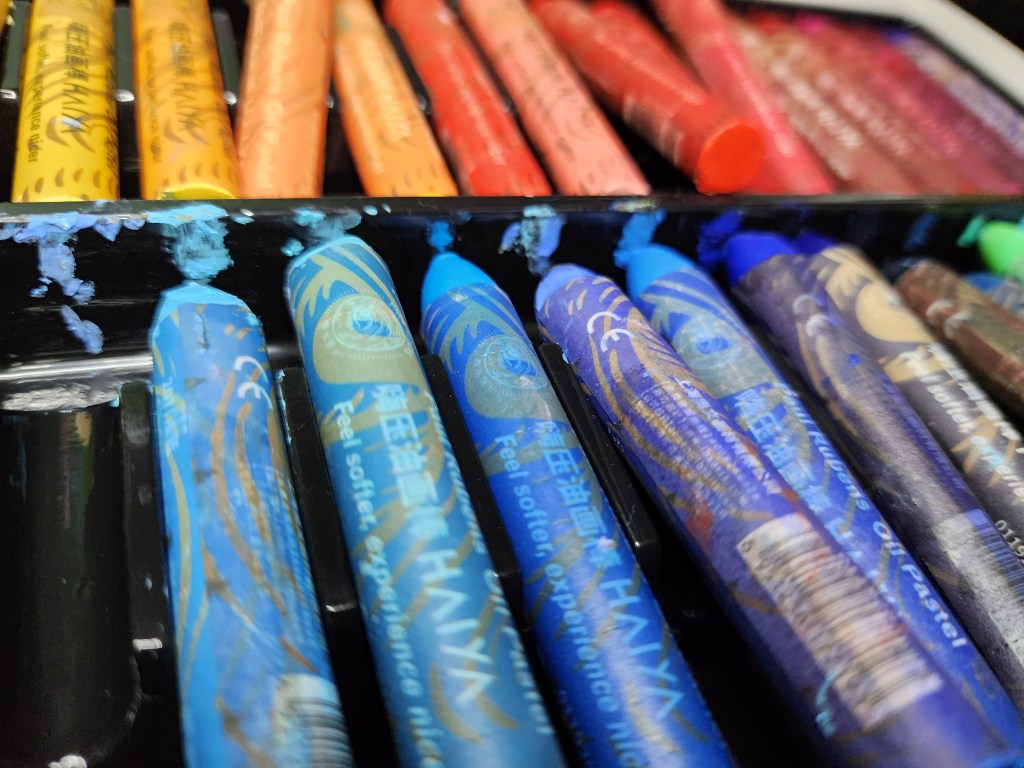
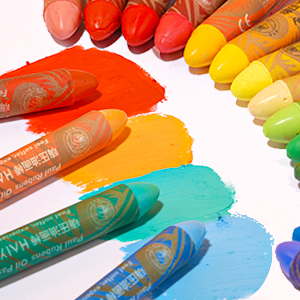
The oil pastel sticks. The sticks measure around 2.75 inches long and about a quarter of an inch in diameter. They seem quite large, especially when compared to other brands Each has a well-designed label that seems easy to peel when necessary. The labels contain the brand and color, but what amazes me is that the opacity, lightfastness information, and pigments used are also indicated there. Through this I found out that the set’s cobalt violet light and red deep actually use cobalt (PV15) and cadmium (PR108) pigments, thus explaining the notice about the use of heavy metals in the package. There are some Chinese texts that I could not read myself which (thanks to Bixby vision) turned out to be translations of the pigment information, as well as the company name and contact details. The tip of the sticks are pointed, akin to a bullet, which is great for covering large areas when held diagonally and fine details when the tip is used. This shape also seems to omit the need to peel the labels early to cover large areas.
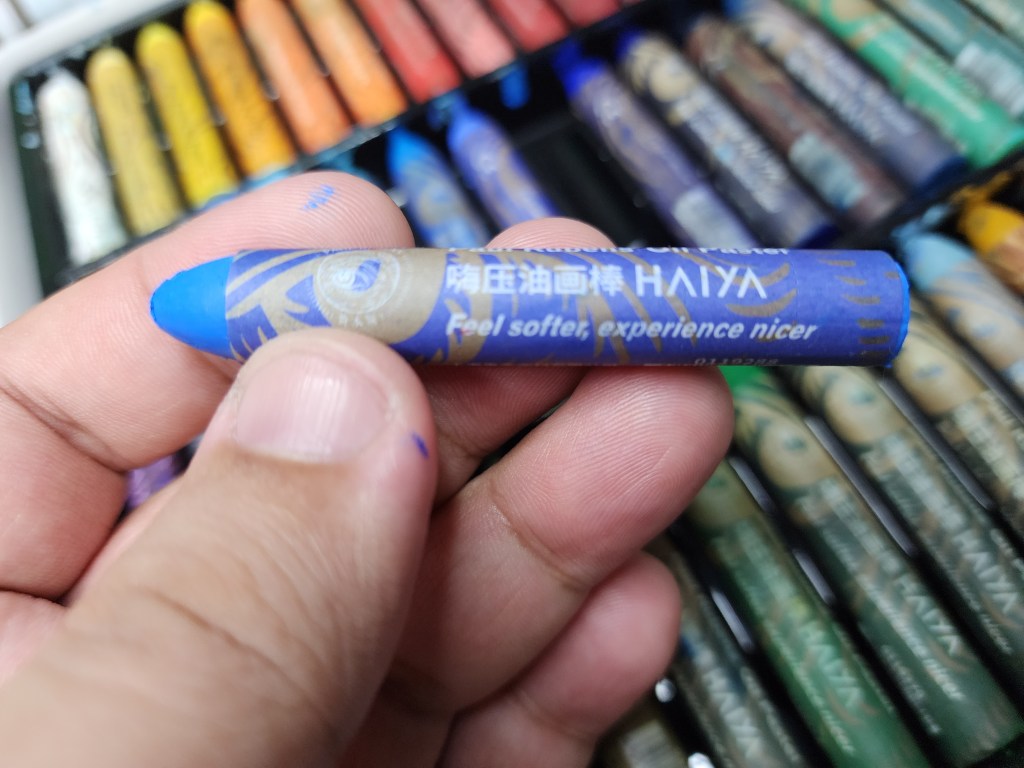
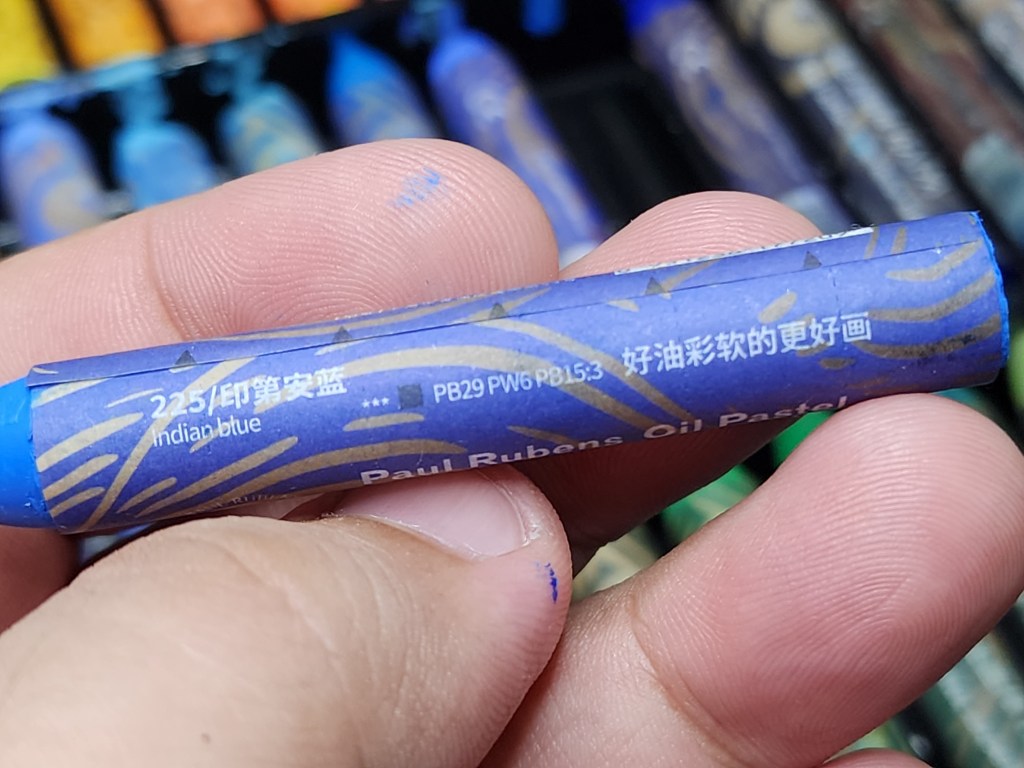
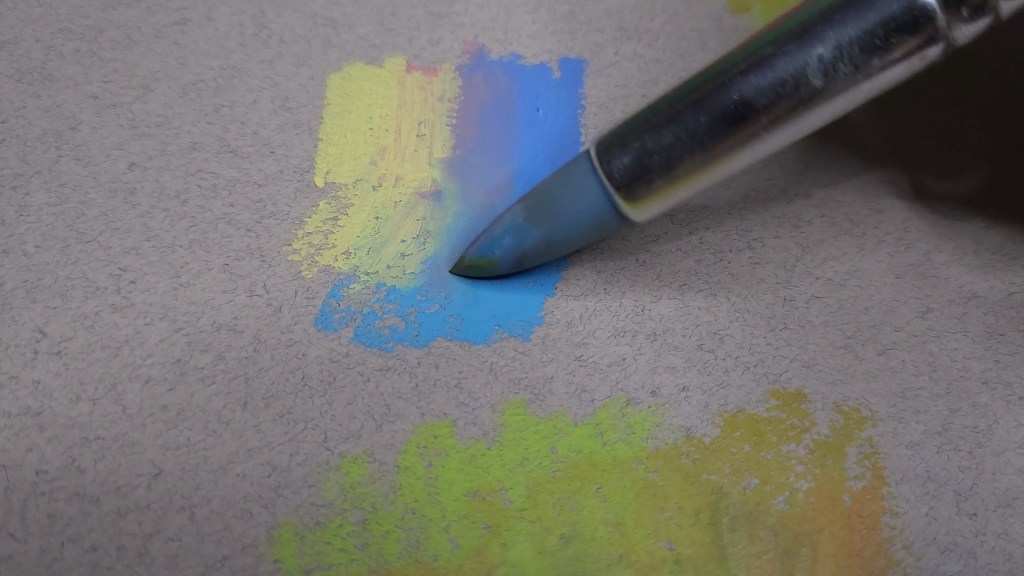
The sticks are so creamy and pigmented, of artist quality indeed. I often use a color shaper in blending, and usually in inexpensive oil pastels the pigments would clump together due to the pigments and binder used, hence I often use expensive brands as they do not have the problem. The Paul Rubens oil pastels are just as good, they actually feel more like lipstick or butter. I tried doing a few swatches and saw that the pigments adhere to the support well (I often use pastel paper) and they blend really well and layering can be done quite easily, too.

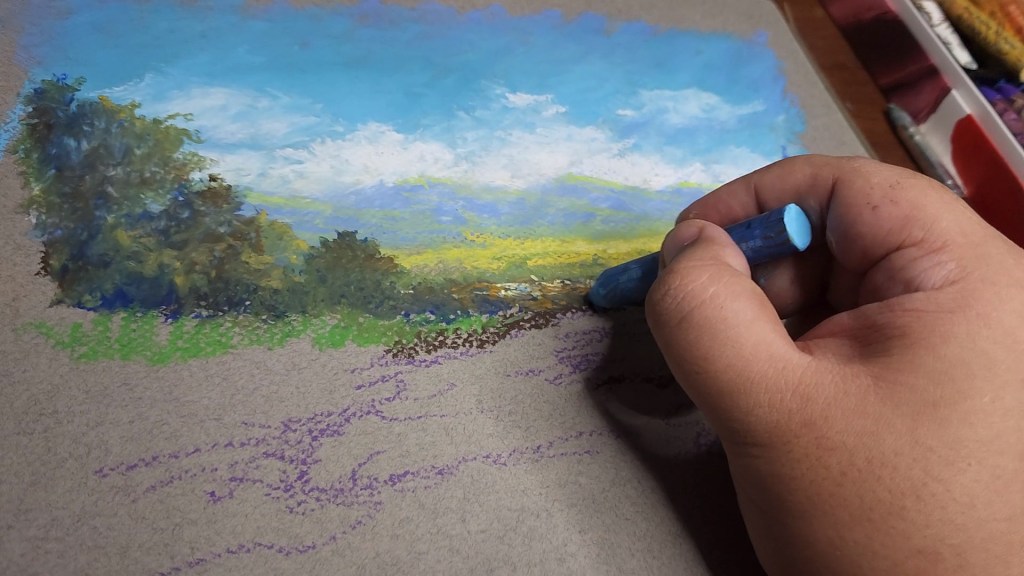
I was so impressed that I immediately tried making a small landscape painting using the set that I have and the experience was really pleasant, it was as if I was using my oil pastels that cost a lot more. In the box and labels of each stick, it says “feel softer, experience nicer,” and their sticks can really deliver. I left the painting halfway through for about a day to see if the pigments would settle and allow for more layers to be applied. The pigments indeed settled, and more layers can be added without messing up the previous layers. If ever there is a need to reactivate the previous layers, it can always be done easily with the color shaper. I suppose using turpentine or mineral spirits for underpainting will work too. The sticks would work will with oil paints. It is also possible to create impasto effects by adding more pressure, or using a palette knife.
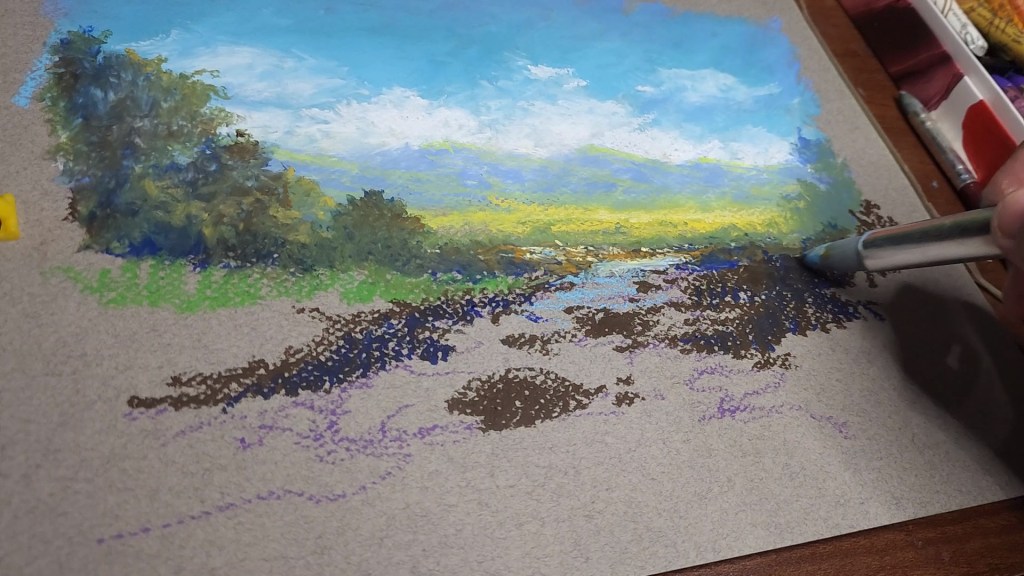
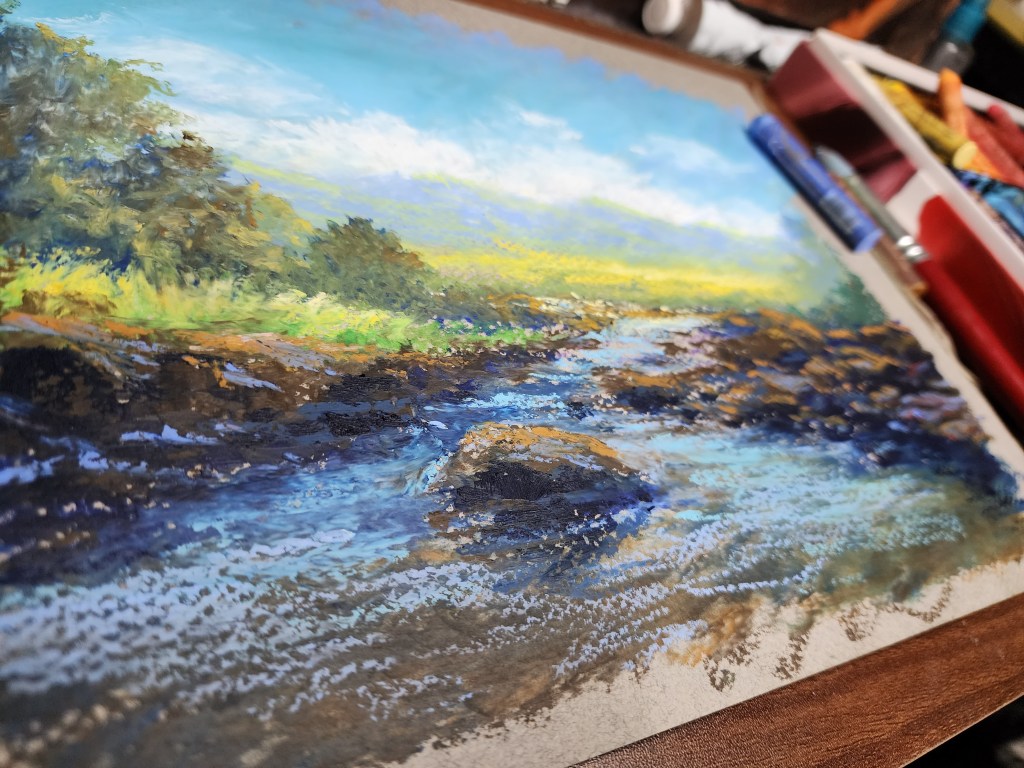
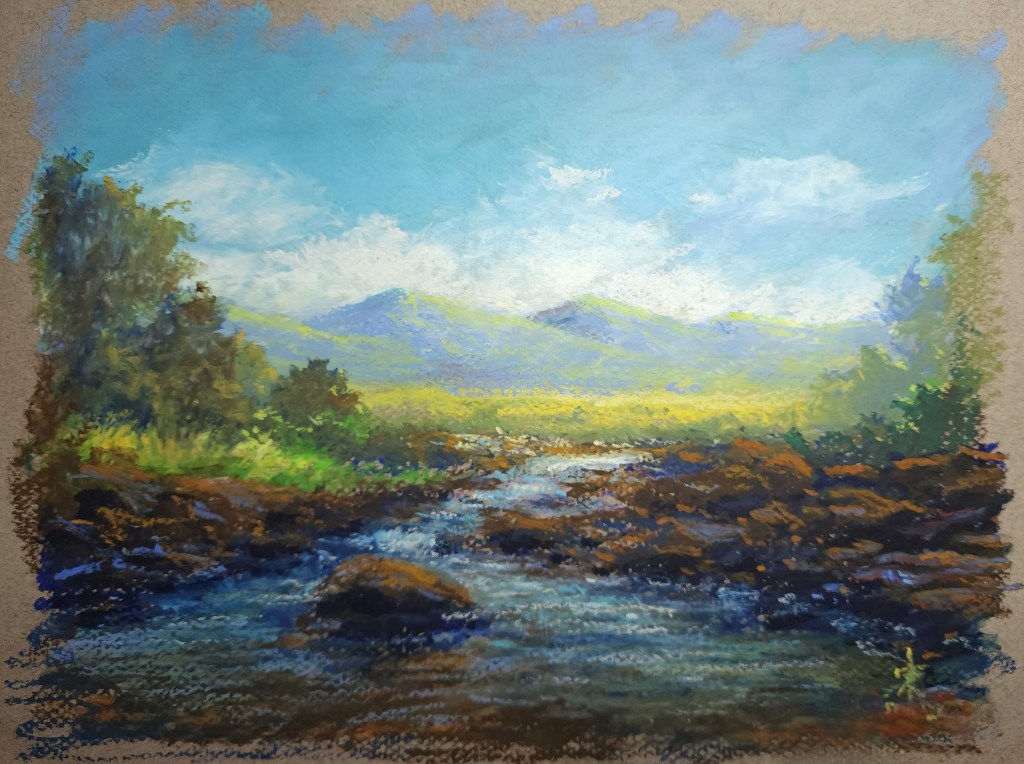
I am personally impressed with the product, that I highly recommend it to artists of all skill or experience levels, though it seems quite clear that the set was made for professional artists. The Paul Rubens Artist Oil Pastels seem just as good as the more expensive and popular brands; even more economical. Using Bixby vision’s real-time translation, I was able to learn from the leaflet that the brand was established to offer as solution for artists who suffered from the high prices and unavailability of imported art materials. In 2010, the president of the Chinese Painting Academy encouraged the company that would become Paul Rubens to establish the brand. They consulted with artists and experts from as far as Germany, Belgium, and the Netherlands to learn more about pigments and how to make quality art materials. The company has the mission to make top quality art materials avaialble to more people. With my experience with their oil pastels, I would say they are on the right track. I know a lot of artists who are really skilled, especially with oil pastels, but they could not afford the expensive brands that have been known to be at the top tier in terms of quality. The Paul Rubens Artist Oil Pastels solves the problem as they are just as good – lightfast, soft, and blendable at prices that would not break the bank.

Here are some links to the same set I am using, as well as the company website and Instagram account.
Paul Rubens 48-color HaiYa Oil Pastels:
US: https://bit.ly/40eKnHA
UK: https://bit.ly/3ziDRnJ
EU: https://bit.ly/3TX8uIS
Aliexpress: http://bit.ly/3FbpJjv
Website: https://bit.ly/3FeA4eY
Paul Rubens Instagram: https://www.instagram.com/paulrubensart/
©2023. RML Sing. All rights reserved.
 Sining ni Sing