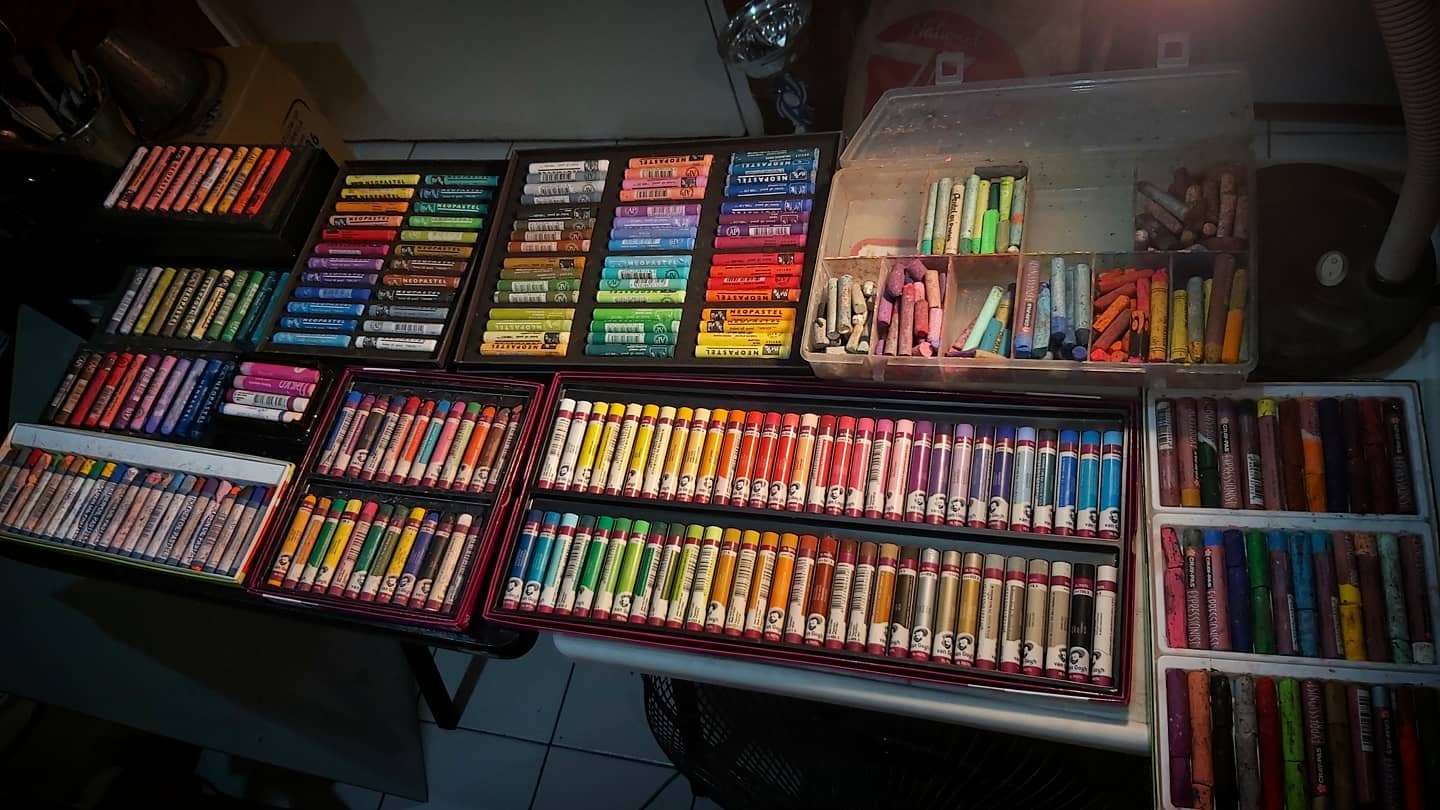
The medium that literally feels like home. I will never get tired of the familiar sticky feeling in the hands, the strong smell that I love probably next to wax crayons. This medium that I used merely for coloring as a child has become one of the strongest in my arsenal.
I have used several oil pastel brands throughout the years. I have learned to generally look at three core characteristics in choosing what brand will I use:
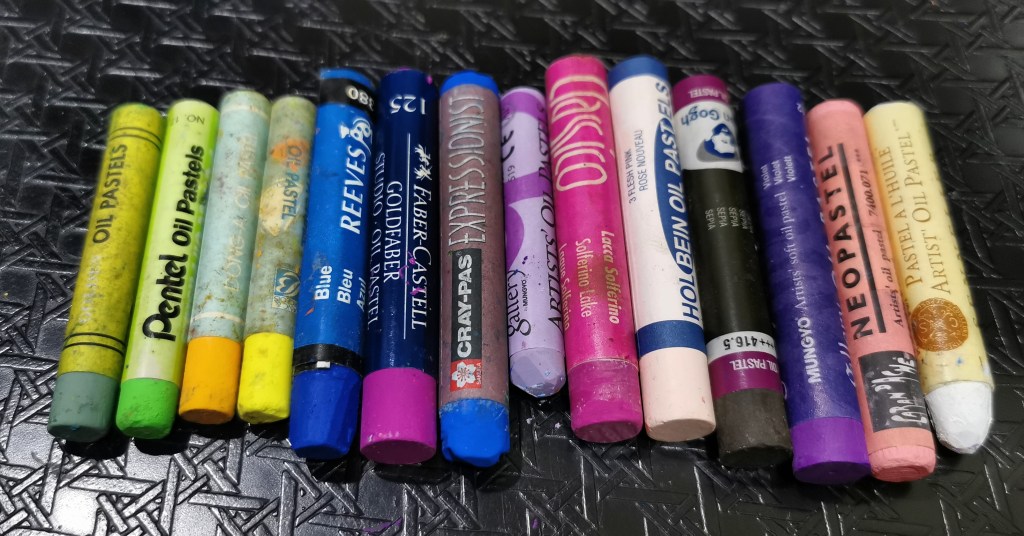
- Softness – oil pastels can be hard and soft, depending on the brand. The variations in softness can be helpful. For instance, hard oil pastels can be good for blocking in and creating bold strokes while the softer ones can be used for top layers. Sennelier is the softest brand I have tried, followed by Caran d’Ache Neopastels and Mungyo Gallery Soft Oil Pastels. Royal Talens Van Gogh, Holbein Academic, and Sakura Cray-pas Expressionist are somewhat hard, while Maimeri Classico and Lefranc & Bourgeois are the hardest in my experience.
- Blendability – oil pastels are a cross between pastels and oil paints. The strenght of the medium lies in the ability to be blended on the support itself, unlike regular hard and soft pastels. Professional grade oil pastels like Caran d’Ache Neopastels and Sennelier have excellent blendability.
- Lightfastness – The most important aspect that I consider in purchasing. I am quite paranoid about color shifing or fading, the worst things that could happen to an artwork, I would say. Not only that the artwork loses its beauty, it will surely be a nightmare for well-paying clients and my reputation as an artist, too. Most professional grade oil pastels are lightfast.
I have tried several brands in the past. The earliest I could remember was the Cray-pas from Sakura. It was my late uncle’s. My first set, if my memory serves me right, was a box of Pentel oil pastels, which had around 24 colors. My late uncle Joel Leveriza (a childhood buddy of acclaimed artist Elmer Borlongan, they used to take art lessons together) spent an entire evening to teach me how to use it, pretty much to color an ink drawing in oslo paper in that context.
Pentel became my brand of choice since then. The sticks are creamy, and somehow worked well with smudging (which was popular among elemntary school kids at that time) and direct application and blending. When I was in high school I was able to try Dong A and noted the hardness of the sticks and the colors that Pentel did not have. I think I bought a box of Dong A, too, but I did not use it that much.
In College I shifted more into acrylic and preferred soft pastel and colored pencils as my main dry media. But even at that time, I was only into Dong A and Pentel. There were other brands like Best Buy, etc., but I did not pay much attention to them, since I knew what I wanted.
The next time I used oil pastels was in 2016, when I became a part of 2Q Artists Philippines. Two of my mentors there, Jeffrey Consumo and Abelardo Lovendino, often used it on felt paper for live portraits and still life. The renowned artists Fidel Sarmiento and Rene Robles use the same technique too, as far as I know.

A portrait of Marj, oil pastel on velour pastel paper. A live portrait I made during one of our sessions. 
Jeffrey Consumo, oil pastel on velour pastel paper
My renewed fascination with oil pastels allowed me to explore other brands. Aside from the good old Pentel and Dong A, I also bought sets of Reeves (felt like bigger sticks of Pentel), Faber Castell (felt close to Reeves but a bit harder), Sakura Cray-pas Expressionist (really good all-rounder with large sticks, I regret letting my set go), Lefranc & Bourgeois (too hard for me, did not like it at all), Golden (the cheapest one found even in stores, much like Dong A), Holbein Adademic (a step above Dong A and Pentel in terms of quality and price), Royal Talens Van Gogh (Really awesome brand, feels like Holbein but has lightfast ratings that are very good), Maimeri Classico (too hard for me too, never used them for any serious work), Maped Colorpeps (feels like Dong A, just bought it for the periwinle stick), and Atlas Neons (only found in Office Warehouse shops, kinda transparent and fugitive).
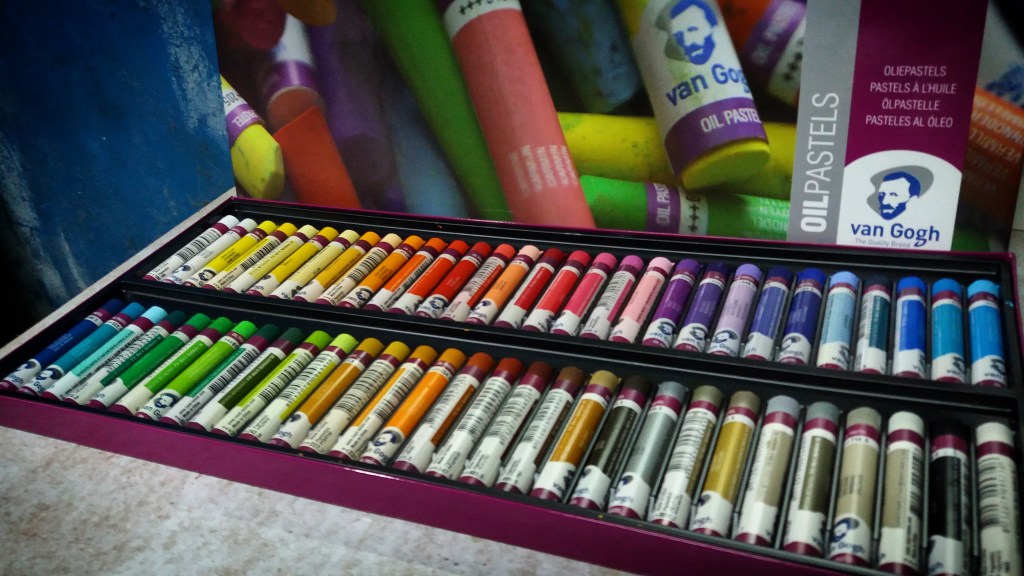
Royal Talens Van Gogh oil pastels. This is the biggest size available here. 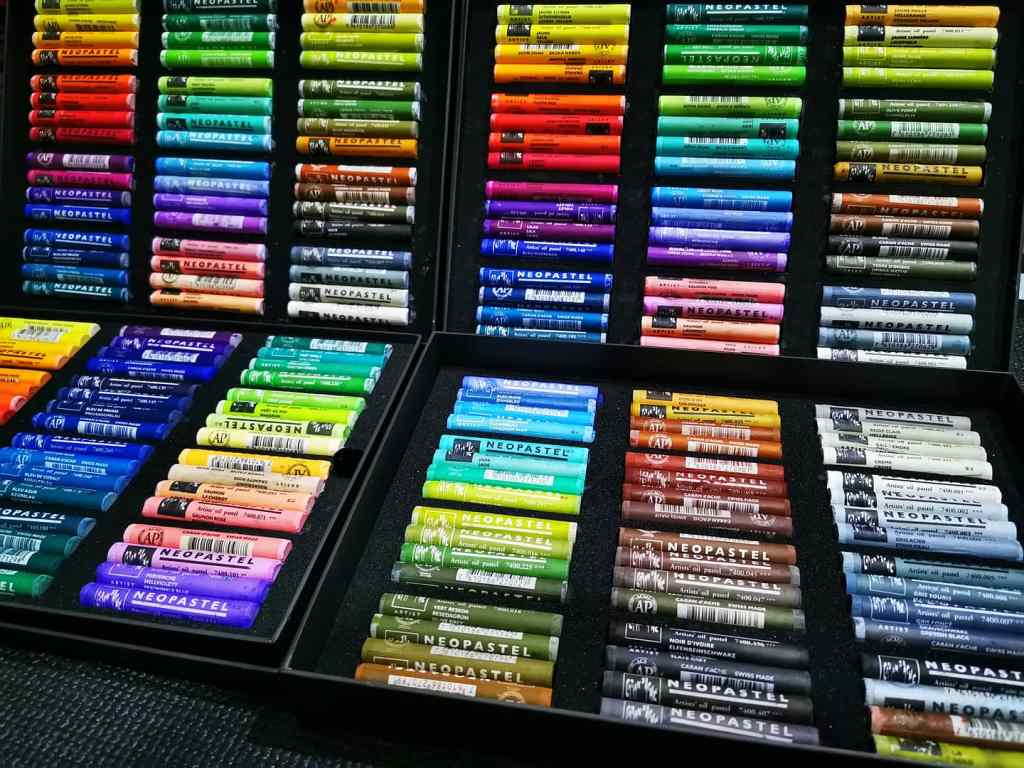
The full range Caran d’ Ache Neopastels. Worth every penny. 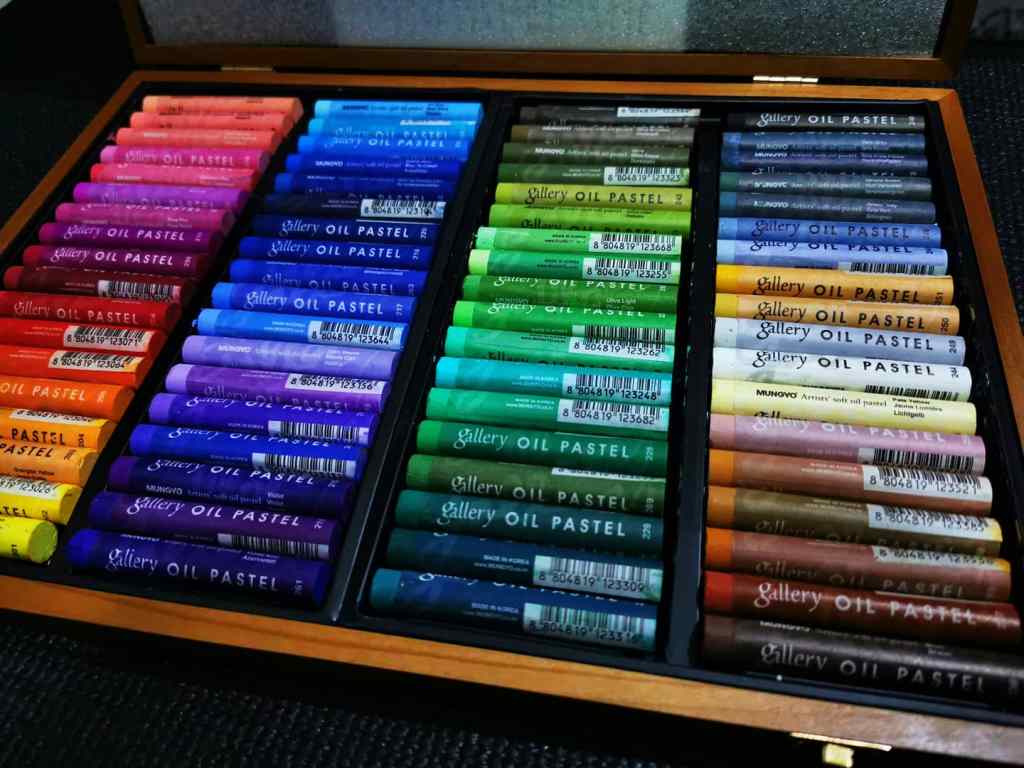
Mungyo Gallery Soft. It came in a nice wooden box. 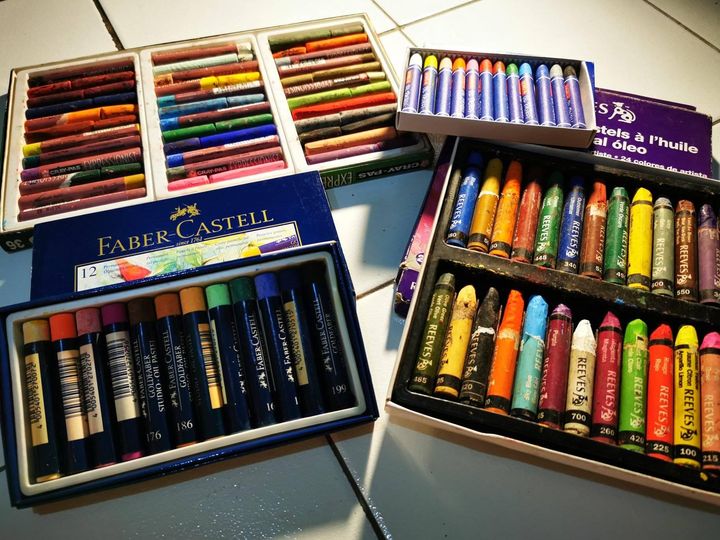
Some student grade oil pastels that I used before and are no longer in my possession.
I was not a sucker for lightfastness and quality until I tried the Caran d’Ache Neopastels. They were the best oil pastels I have ever used in terms of blendability and lightfastness. I only bought them to see if they were really worth the price, and I was blown! Neopastels seem expensive but are actually economical because of the high pigment load. It can also be blended with color shapers and paint erasers, a technique I learned from the amazing Norbing Villez (he uses palette knives for impasto effects, too). This technique, as I have tried, only works well with three brands – Caran d’Ache Neopastels, Mungyo Gallery Soft Oil Pastels, and Sennelier. This is due to the high pigmentation required. The other, cheaper brands tend to form clumps, leaving a translucent layer of oil stained with some pigment.

Caran d’Ache Neopastels and Sennelier work best with color shapers. 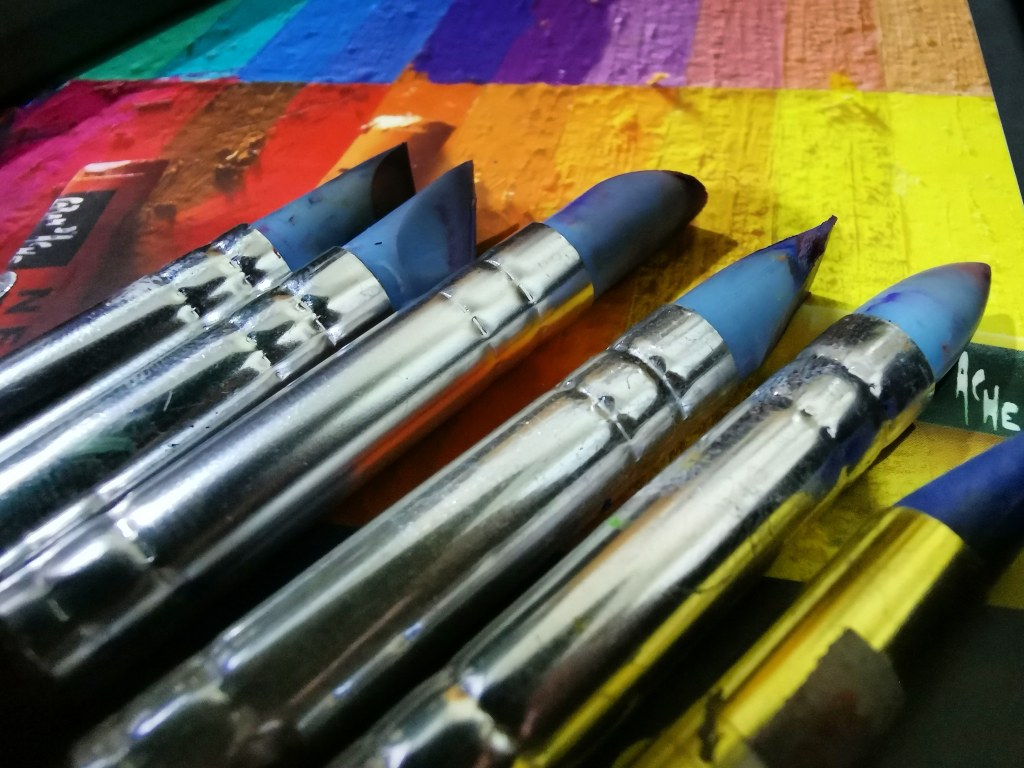
Color shapers. 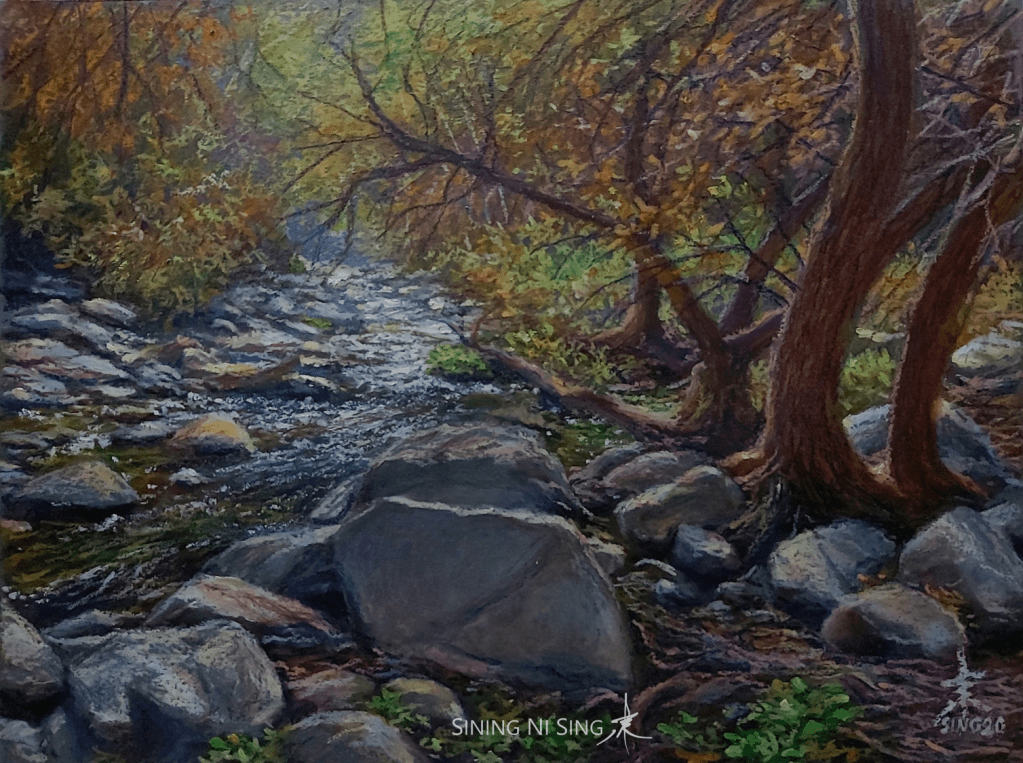
A sample landscape I made using oil pastels and Sir Norbing’s technique. This piece was part of the top five entries in a Let’s Paint Group monthly challenge. (Click to see full image) 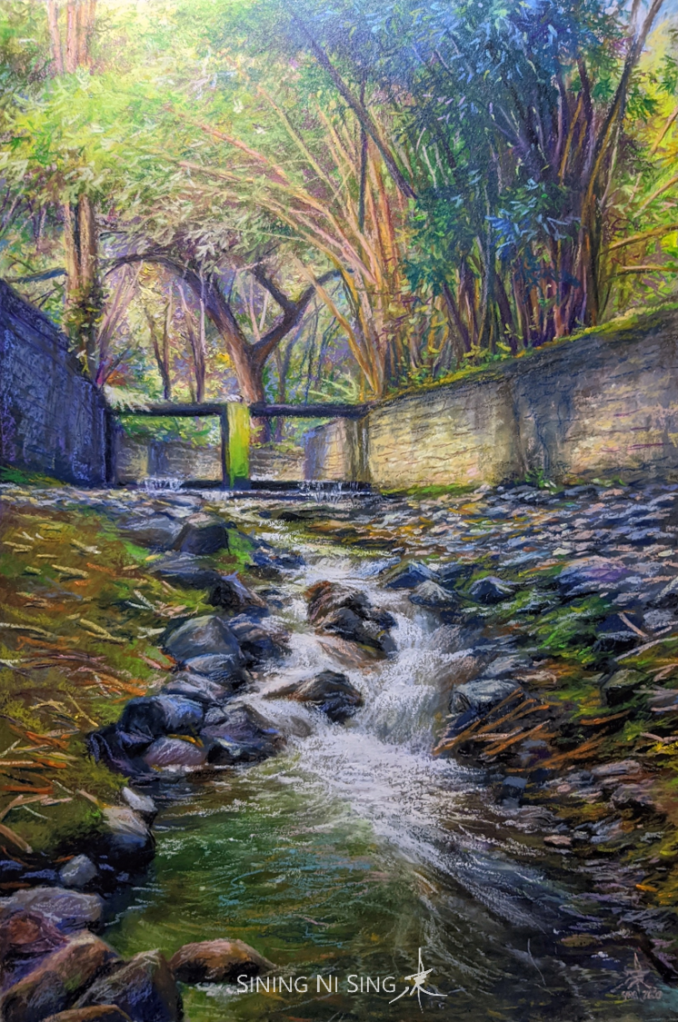
A commissioned oil pastel landscape.
I have several sticks of white Sennelier oil pastel, and they feel like lipstick. I only use them for highlights and on top of the Neopastel layers. I also bought a wood box set of Mungyo Gallery soft oil pastels and I would say it is a good competitor for the two. The regular Mungyo gallery oil pastels are not anywhere close to the soft oil ones, I would say the regular gallery pastels are student grade and the soft oil pastels are professional.

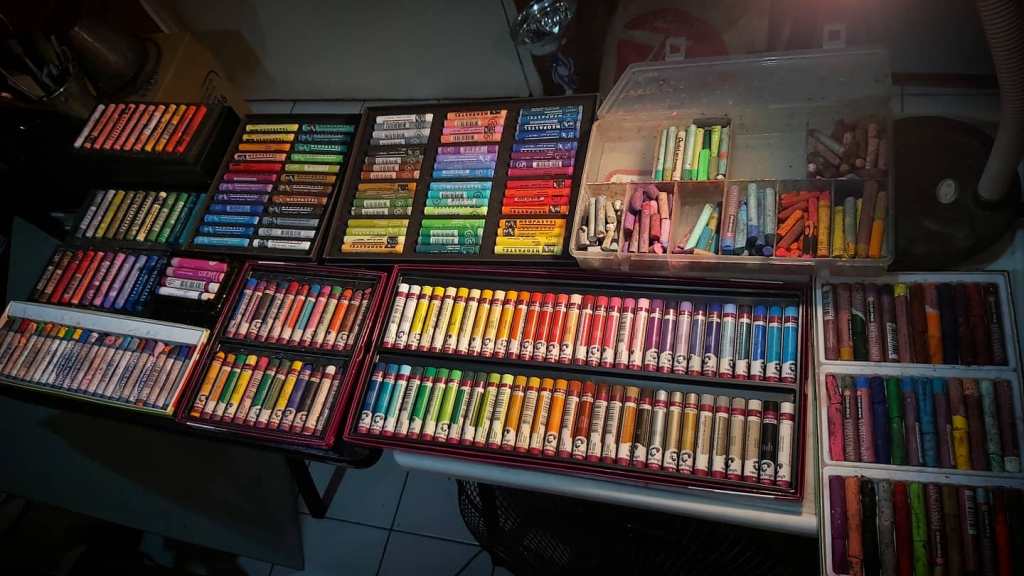
Now my main oil pastel rig consists of the complete set of Neopastels, Sennelier oil pastels (still waiting for the wood box set I ordered, seems like the company ceased production due to the pandemic), Mungyo Gallery Soft, Royal Talens Van Gogh, and Holbein Academic. I still have a box each of Dong A, Pentel, and Mungyo Gallery regular for teaching purposes.
I use my oil pastels on several types of pastel paper. When I was younger, I often used it on oslo paper, sketch pads, of illustration boards – all white surfaces. Now I never use it on white paper. I prefer using Canson Mi-Teintes, Hahnemuhle Lana pastel paper, and Strathmore Toned Tan / Gray 400 Series for my landscapes, especially when using Sir Norbing’s color shaper technique. For portraits, which require direct application and multiple layers, I use Hahnemuhle Velour, which is pretty much the archival version of felt paper. I have seen several artists who use them on sandpaper (or sanded paper). The rough texture of the sandpaper can accommodate more layers and allow the use of impasto-like effects, while eating lots of pastels in the process.
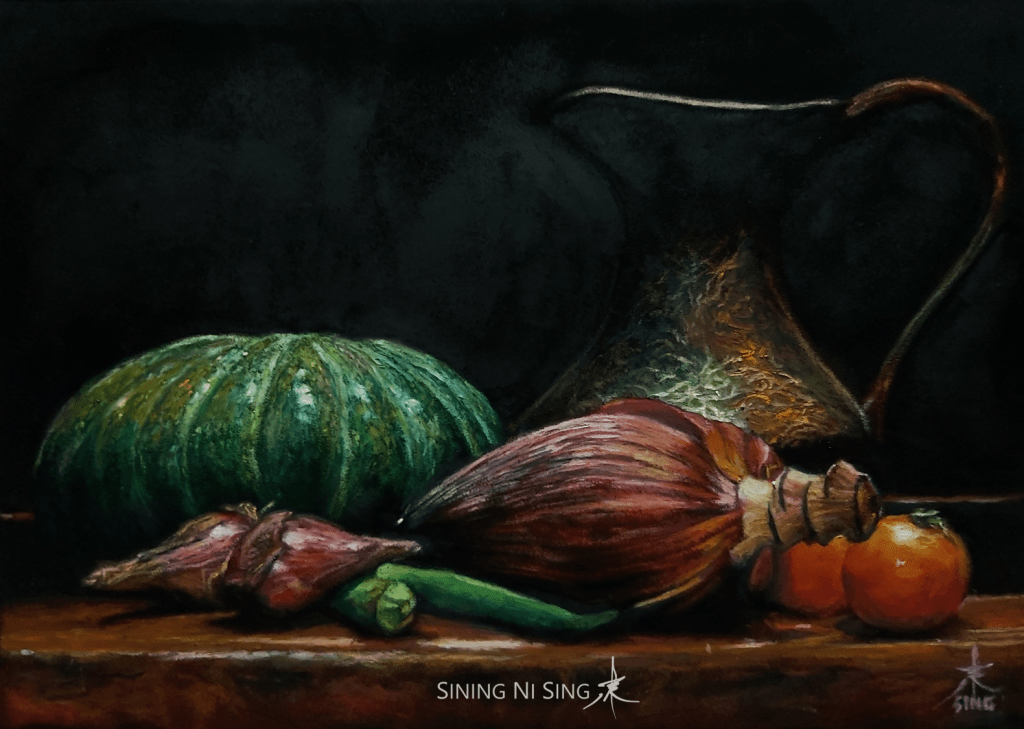
Oil pastels are convenient to use, and when used skillfully they can mimic oil paints. No harmful vapors (except if you still use them with turps), no spills, and no wasteful dried up paints. The only thing I hate about them is the wax bloom, the white layer that forms on sticks after some time. This can happen on artworks too, so I always spray them with archival varnish to prevent this. I prefer Golden anti-UV gloss varnish; Grumbacher also works but it’s too shiny, almost like resin.
Though blending is possible, having a large collection of colors and varying degrees of hardness is a huge advantage. It is necessary to keep several sticks of the most frequently used colors too. This can be difficult if individual sticks are not sold locally.
Among the other drawbacks of using oil pastels is that some pastel societies do not recognize them; perhaps due to their resemblance to oils (especially in the case of Sennelier oil pastels). Some galleries also do not accept works in oil pastel, as if they are inferior to oils and acrylics.
Nevertheless oil pastels are fun to use and can be a used as a good starting point by those who would like to immerse in the arts.
 Sining ni Sing